
The Burnout Equation
Why teacher burnout runs deeper than workload

When I’m rehearsing with a group or teaching a lesson at school, things make sense.
I’m responsible for the music and I have real authority over the conditions that shape the work. I can stop the group, slow the tempo, isolate a section, and change the plan on the fly. I can focus on specific skills, build habits, and hear the difference when it starts to click.
Of course, there are variables. Students get pulled for testing. Field trips. A schedule change. Sometimes a kid simply doesn’t want to miss art, so they miss my lesson instead. Even on the best days, not everything is in my control. Over the course of many years—and a lot of lived frustration, and sometimes outright anger—I’ve learned the difference between variables and powerlessness.
The Parking Lot
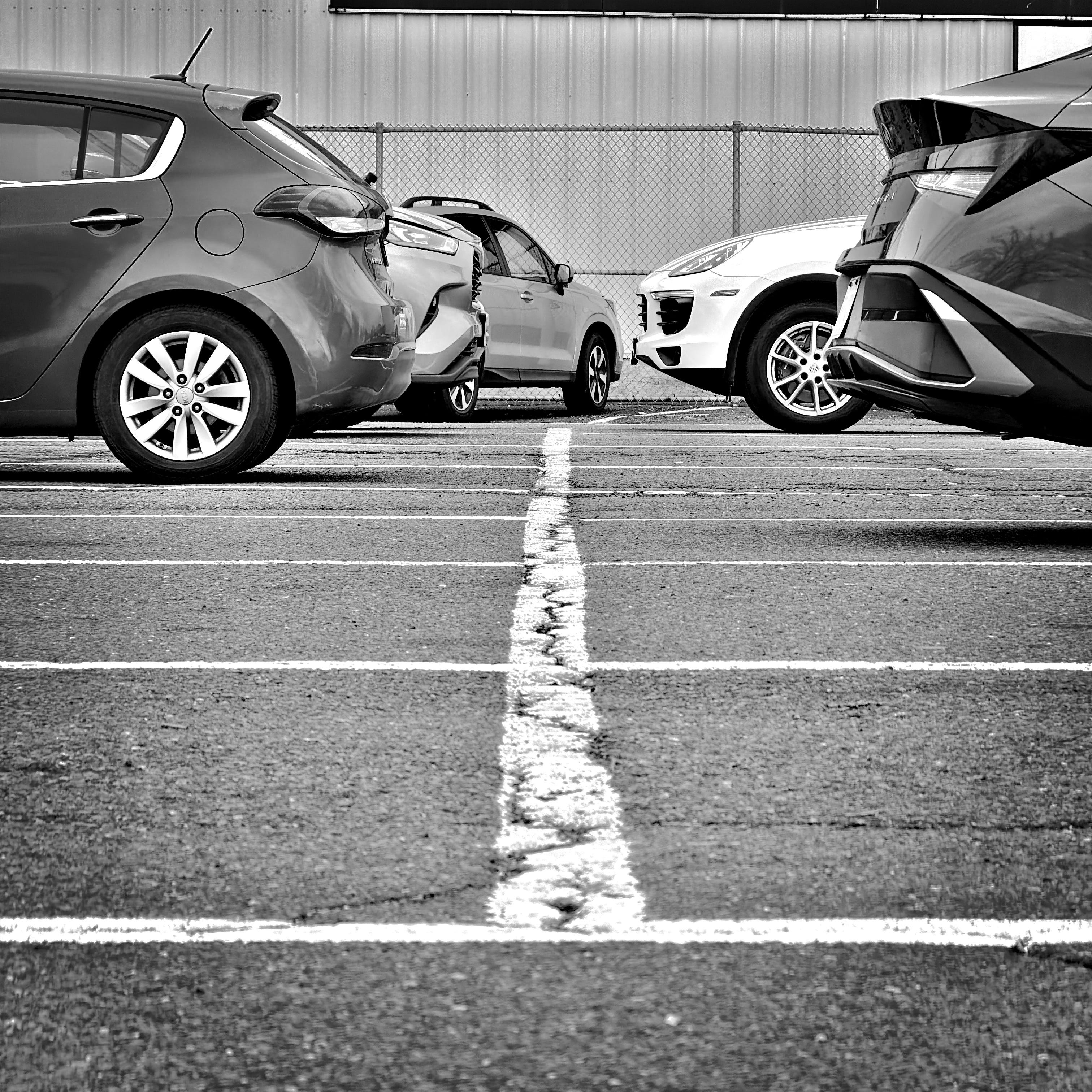
When I taught high school, our marching band rehearsed after school on the parking lot behind the football stadium. Most days it worked. But some days we showed up to a lot full of cars—parked straight across our rehearsal space, right down the fifty-yard line.
There was only so much I could do. I’d call the office and ask for an all-call announcement, but there was no policy to enforce and no urgency anyone else could feel. Even if people eventually moved their cars, we’d lose half the rehearsal waiting. The obstacle belonged to other people, but the consequences and frustration landed on me and my staff.
And when the cars didn’t move, we still worked.
We re-blocked, compressed the drill, and marched around cars. We made do, because we cared about our kids and our program—and because we knew help wasn’t coming any time soon.
That’s the key idea: when the obstacle belongs to someone else, the responsibility still lands on the people doing the work.
That’s where burnout starts.
The Wrong Diagnosis
Most conversations about teacher burnout start in the same place: workload, low pay, large classes, too many meetings, too many emails, not enough hours in the day. Those things are real and measurable, but they don’t fully explain the kind of burnout that sneaks up on you — the kind that doesn’t feel like exhaustion so much as erosion.
There are two kinds of burnout, and we tend to only talk about one of them.
The first is quantitative burnout. Too much to do, too little time, too few resources, and often too little compensation. It is the burnout of overload and imbalance: too many demands, not enough support, not enough hours, not enough pay. It’s visible, it’s nameable, and while it’s genuinely hard to fix, at least everyone agrees it exists.
The second kind is harder to name. Let’s call it qualitative burnout. It can happen even when the workload is manageable and the pay is fair. It happens when you’re asked to guarantee results without being allowed to control the conditions. You’re responsible for the outcome, but the conditions that shape that outcome are outside your reach. Over time, that gap between responsibility and control starts to wear a person down.
When you’re experiencing qualitative burnout, you’re still showing up. You’re still doing your job, still performing your duties, still giving students what they need in the moment. From the outside, everything looks fine. But internally, something is shifting, unnoticeably at first. You start absorbing outcomes you didn’t create, carrying consequences that belong to a system that isn’t carrying them with you.
And when you’re a teacher—someone who chose this work, who believes in it, who has tied their sense of self to doing it well—that misalignment doesn’t register as a systems problem. It registers as personal failure: a steady frustration and a quiet kind of powerlessness.
That confusion matters. It’s where the real damage happens.
The Burnout Equation
In my own career, and in the careers of the many educators I’ve worked alongside and talked with over the years, I’ve noticed that the path to deep burnout runs through four specific variables: caring, responsibility, authority, and autonomy. Not in isolation, but in relationship to each other.
Here’s the equation that captures it:
Burnout = (Caring × Responsibility) / (Authority × Autonomy)
Each variable matters. But it’s the relationship between them that determines whether the work sustains you or slowly hollows you out.
Caring is your moral and emotional investment in the work. It’s the part of you that wants the lesson to land, the concert to go well, the kid in the back row to finally get it. Caring is why you became a teacher and why you stay. It’s not a weakness. But it is a multiplier — and that matters more than most people realize.
Responsibility is the expectation that outcomes are on you. When the concert falls flat, when a student struggles, when the program loses momentum — responsibility is the weight of knowing that, at least in part, this is yours to answer for. Responsibility isn’t inherently bad either. Paired with the right conditions, it’s clarifying. It focuses your energy. But it can also become a trap.
Authority is leverage — the actual ability to shape the conditions of your work. In a classroom, authority looks like: I can stop the rehearsal. I can change the tempo, change the plan, change the approach. I can respond to what I’m seeing in real time. Authority is what makes responsibility feel fair rather than punishing.
Autonomy is the freedom to decide how you do the work — your pacing, your methods, your sequence, your voice. It’s different from authority. Authority is about conditions; autonomy is about approach. A teacher can have authority over a room and still feel micromanaged in how they’re expected to run it. Both matter. When they’re present together, they create the conditions for sustainable, energized work.
The equation works like this: when authority and autonomy are high, caring becomes fuel. You can see a problem, respond to it, solve it, and watch it get better. The caring feeds the work, and the work feeds the caring back.
But when authority and autonomy shrink — when you’re held responsible for outcomes you can’t meaningfully influence — caring stops being fuel and starts becoming a burden. Obstacles you can’t remove become an emotional tax. Consequences you didn’t create still become yours to carry, drawing from a reserve that doesn’t automatically replenish.
Caring becomes carrying.
Carrying the consequences of problems you didn’t create inside a system you can’t fix.
Think of it as a three-legged stool: caring, responsibility, and leverage — where leverage is the combination of authority and autonomy. When the legs are roughly equal, the stool is stable. Hard work feels clean. You’re tired at the end of the day, but not compromised. You feel the weight of the work, but it doesn’t feel unfair.
When the legs are unequal — when responsibility is high and leverage is low — the stool tips. And the deeper your caring, the harder you fall, because caring doesn’t insulate you from that imbalance. It amplifies it.
Burnout isn’t caused by caring too much. Burnout is caused by caring in a system that repeatedly refuses to meet you halfway.
Most teachers don’t realize what’s happening in the moment because it hides in plain sight: the frustration comes from carrying tasks that were never theirs to carry.
The trap is that it doesn’t feel like overreach—it feels like being a good teacher.
The Pattern Worth Interrupting
I still think about that parking lot.
Not with bitterness — or at least not only with bitterness. I think about it because it taught me something true about work inside an institution: the institution will not always match your level of care. Obstacles will appear that belong to someone else. Help will not always arrive. And still, you keep working, because the kids are there, and the music is there, and to you that matters.
That is not weakness. It is one of the most admirable things about teachers, and music teachers in particular. But admirable is not the same thing as sustainable.
Part of surviving this work is learning to see it clearly. Just because something matters deeply to you does not mean it will matter equally to the people running the system. That is not cynicism; it is clarity — the kind that helps you recognize the difference between what is truly yours to carry and what never was. And recognition is where steadier forms of caring begin.
The parking lot was never my fault. Neither are many of the forces that wear teachers down. But they become much more damaging when we keep interpreting them as personal failures, or keep expecting the system to behave like a partner when often it behaves more like weather.
You cannot negotiate with weather. You adjust to it.
That doesn’t mean giving up or not caring at all. It means learning the difference between what deserves your effort and what will only drain it. It means caring fully inside your circle of influence, and refusing to measure yourself by problems you were never given the power to solve.
The teachers who care most are often the ones who absorb the most. They volunteer first, compensate quietly, stay late, cover gaps, carry extra weight, and blame themselves when the larger structure does not hold. That pattern does not have to continue.
Not every problem can be fixed. Not every obstacle can be removed. Not every battle belongs to you.
But if you can learn to care without taking responsibility for everything, to teach without internalizing every institutional failure, and to hold on to what is actually yours to shape, then the work becomes lighter in an important way. Not easier. But cleaner.
And that may be the beginning of something like endurance.


I'm not a teacher, but have certainly experienced the same things in my career. The 3-legged stool is a good symbol, especially because you feel a constant drain of energy as you're always compensating for the lack of balance.